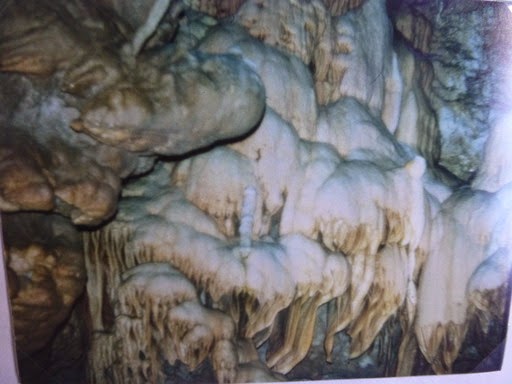
My second blog on Malta's limestone. See first part on the
limestone and caves.
The Limestone Heritage is a very interesting place, basically an exhibition of how the stone was quarried. It is located in an old quarry just outside Siggiewi. Globigerina Limestone was quarried here but due to the number of fossils the rock was unsuitable for building so the quarry was only operational for 5 years.
9 Euro entry. Firstly you watch a short film in an auditorium, many languages are available. The film was really interesting, telling about the use of quarrying from early times to present. The film said that more stone has been produced in the last 40 years using modern mechanized techniques than was produced in the last 700 years. In the days of horse and carts, 30 blocks could be put on one cart. The men worked from sunrise until midday.
Then you go on a self guided tour with a headset. The exhibition is laid out in the old quarry and there are 14 stops with explanation at each one. You see the methods of stone extraction, originally done by hand using splitting techniques, then the more modern techniques using machinery and saws and you see how the stone was loaded onto the trucks - these replaced the older horse and carts. It was really good although I found it a bit rushed. The models of the workers looked lifelike, wearing real clothes.
The quarry walls -
 |
| bell well |
After you go around a few more exhibits showing the use of stone. You walk past a farmhouse with has many stone features, e.g. water channels, cupboard, stove, ventilator, staircase etc.
This example of stone cat door is interesting -
There is an example of a girna, the traditional Maltese stone hut used by herdsmen for shelters and many can still be seen across Malta.
There is also an example of a limestone tomb.
Then you go into the garden where orange, lemon, olive and pomegranate trees are grown – citrus groves are commonly planted in disused quarries as they are a sun trap. The petting area has goats and 2 donkeys and there are birds such as peacocks.
Inside the building is a museum with a large display of masonry tools, for sawing and splitting the stone.
And of course there is a souvenir shop at the end of the tour!
---
© Liz Price
No reproduction without permission